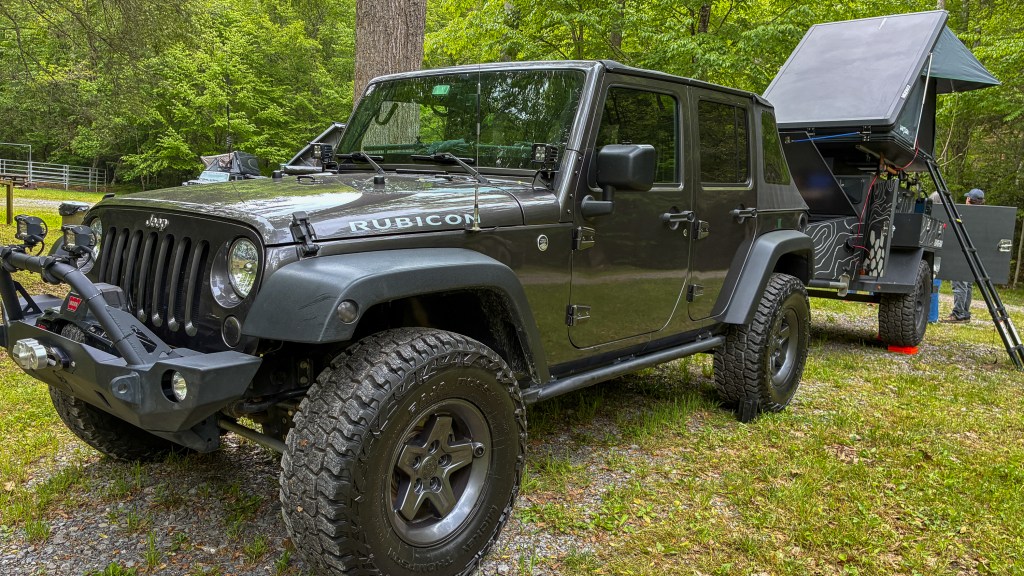
A long downhill road can reveal weaknesses in a vehicle that may never appear during normal driving. I learned that firsthand while traveling through Vermont in my 2016 Jeep Wrangler Unlimited Rubicon with my trailer in tow.
Most of the time, the Jeep’s brakes had felt normal. Around town, on the highway, and during ordinary stops, I had no obvious reason to believe there was a problem. That changed on the long, descending forest roads of Vermont.
As the downhill driving continued, the brake pedal began to feel softer than usual. The Jeep still had brakes, but the pedal did not inspire the same confidence it normally did. When you are towing a trailer on narrow, winding roads, any change in braking feel gets your attention very quickly.
After returning home and thinking through what had happened, I began investigating the possible causes. The brake pads and rotors were also inspected. They appeared normal, with no obvious excessive wear, damage, or other visible problem that would explain the softer pedal.
That troubleshooting eventually led me to have the Jeep’s brake fluid replaced with DOT 4 fluid at Leeman Upfit in Salem, Ohio.
Since the fluid change, the brakes appear to feel better. Although one service and a limited amount of driving cannot prove exactly what happened in Vermont, the improvement supports the conclusion that old or heat-stressed brake fluid was probably contributing to the soft pedal.
The Conditions That Exposed the Problem
The important part of this story is that the soft pedal did not first appear during ordinary driving. It happened during a specific combination of conditions:
- A long downhill descent
- Repeated or sustained brake use
- Forest roads with limited opportunities to let the vehicle coast freely
- The additional weight and momentum of a trailer
- A Jeep that had otherwise seemed to brake normally
That combination puts considerably more heat into a braking system than a typical stop at a traffic light.
Brakes convert the vehicle’s motion into heat through friction. The brake pads clamp against the rotors, slowing the wheels while generating heat in the pads, rotors, calipers, and surrounding components. After a normal stop, the brakes usually have time to release that heat before being asked to do much more work.
A long descent is different. If the driver must repeatedly apply the brakes—or maintain light pressure for extended periods—the system can accumulate heat faster than it can release it. Towing adds even more energy that must be controlled because the Jeep is not only slowing itself but also helping manage the trailer’s weight and momentum.
The changing pedal feel suggested that heat was affecting some part of the braking system.
Inspecting the Pads and Rotors
Once I arrived home, the brake pads and rotors were inspected for visible signs of a problem. They appeared normal. There was no obvious excessive wear, rotor damage, or other visible condition that would readily explain what I had experienced.
A visual inspection cannot rule out every possible brake problem. It does not test the boiling point of the fluid, measure hydraulic pressure, or prove that every internal component is working perfectly. However, finding normal-looking pads and rotors made badly worn friction components or obvious rotor damage less likely explanations.
That finding directed more attention toward the hydraulic side of the system—particularly the age and condition of the brake fluid.
What a Soft Brake Pedal Can Mean
A soft or spongy brake pedal can have several possible causes. Air in the hydraulic system is one. Air compresses more easily than brake fluid, which can make the pedal feel springy or allow it to travel farther than normal.
A fluid leak can also produce a soft pedal, as can deteriorated flexible brake hoses, an internal master-cylinder problem, improperly bled brakes, or other mechanical faults. Those possibilities should never be dismissed when a brake pedal behaves abnormally.
In my case, however, the circumstances pointed strongly toward heat and brake-fluid condition. The pedal changed during an extended downhill towing situation rather than suddenly becoming soft during routine driving. The pads and rotors also appeared normal when inspected after the trip. Together, those facts made overheated brake fluid—or moisture in aging fluid lowering its effective boiling point—a reasonable suspect.
This was still a troubleshooting conclusion, not laboratory proof. Without testing the old fluid or reproducing the exact conditions with diagnostic equipment, it is impossible to say with complete certainty that fluid temperature was the sole cause. Nevertheless, the symptoms, driving conditions, normal pad and rotor inspection, and subsequent improvement all fit that explanation.
Why Brake Fluid Changes Over Time
Brake fluid operates in a sealed hydraulic system, but it does not remain in perfect condition forever. DOT 3 and DOT 4 fluids are hygroscopic, meaning they absorb moisture over time.
That moisture matters because it reduces the fluid’s boiling-point reserve. Fresh brake fluid can tolerate substantial heat, but fluid that has absorbed water can boil at a lower temperature.
When brake fluid becomes hot enough to boil, vapor bubbles can form in the hydraulic system. Unlike liquid brake fluid, vapor is compressible. Pressing the pedal may then compress those bubbles before enough hydraulic pressure reaches the calipers. The result can be a pedal that feels soft, travels farther, or requires more effort to produce the expected braking response.
That description was consistent with what I experienced in Vermont: normal-feeling brakes under ordinary conditions, followed by a softer pedal after prolonged downhill braking while towing.
Even if the fluid never reached a full boil, old fluid, absorbed moisture, contamination, and heat could still have contributed to inconsistent pedal feel. Replacing the fluid also gives the system an opportunity to remove trapped air during the bleeding process.
Why I Chose DOT 4
The original recommendation for the 2016 Jeep Wrangler is Mopar DOT 3 brake fluid meeting SAE J1703. Importantly, Jeep’s own owner’s manual also says DOT 4 fluid is acceptable if DOT 3 meeting that specification is unavailable.
The official 2016 Jeep Wrangler Owner’s Manual can be viewed here.
DOT 3 and DOT 4 are both glycol-based brake fluids and are generally compatible in braking systems designed for these fluids. DOT 4 normally provides a higher boiling-point specification than standard DOT 3, which can offer additional protection under demanding conditions.
That extra temperature margin was appealing for my Jeep because it is used for more than short, unloaded trips around town. It tows a trailer and travels on terrain where long descents may require sustained brake-system performance.
Changing to DOT 4 does not increase the physical size of the brakes, create more clamping force, or compensate for worn pads, damaged rotors, malfunctioning calipers, or improperly adjusted trailer brakes. It also does not make the braking system immune to overheating. What it can provide is greater resistance to fluid boiling when temperatures rise.
Based on the Vermont experience, that additional margin made sense for how I use the Jeep.
The Service at Leeman Upfit
I had the brake-fluid service performed at Leeman Upfit in Salem, Ohio. The old fluid was replaced with DOT 4 fluid, and the hydraulic system was bled as part of the service.
A proper fluid replacement is more meaningful than simply removing some fluid from the master-cylinder reservoir and pouring new fluid on top. The older fluid remains throughout the brake lines and calipers unless it is flushed through the system. Bleeding also helps remove air that may be contributing to a soft pedal.
After the service, the brakes seemed better. The pedal felt more reassuring, and the overall braking response appeared improved.
That result does not absolutely prove that moisture-contaminated fluid was the only issue. The bleeding process itself may have removed a small amount of air, and ordinary variations in driving conditions can affect how brakes feel. Still, the improvement following a complete fluid change makes the original diagnosis more credible.
For me, it was worthwhile maintenance regardless. Brake fluid is relatively easy to overlook because there may be no warning light or dramatic symptom telling the owner that it has aged. Its condition becomes particularly important when the vehicle is heavily loaded, towing, or descending a long grade.
Fluid Is Only Part of the Towing-Brake System
The experience also reminded me that safe downhill towing depends on more than the Jeep’s brake fluid.
The trailer’s brakes need to be operating correctly and contributing an appropriate amount of braking force. If the trailer brakes are weak, poorly adjusted, or not receiving the correct controller output, the Jeep must absorb more of the combined braking load. That increases heat in the Jeep’s brakes and can make brake fade more likely.
Brake-controller settings should be checked whenever the trailer load changes significantly. The correct setting allows the trailer to help slow the combination without locking its wheels or pushing the tow vehicle.
The Jeep’s brake pads, rotors, calipers, hoses, and fluid level also remain important. Higher-boiling-point fluid cannot correct a seized caliper, worn friction material, glazed pads, a damaged hose, or a hydraulic leak.
The normal-looking pads and rotors and the improvement following the fluid replacement are both encouraging, but they do not eliminate the need for routine inspection.
Better Technique on Long Descents
The other major lesson was the importance of using the drivetrain to help control speed.
Selecting a lower transmission gear allows engine braking to slow the Jeep, reducing the amount of work demanded from the wheel brakes. The goal is to begin the descent at a controlled speed instead of allowing the Jeep and trailer to accelerate and then asking the brakes to remove all that additional speed.
When braking is necessary, deliberate applications followed by periods of release may allow the brakes to shed more heat than continuously riding the pedal. The appropriate technique depends on the road, surface, grade, traffic, traction, and trailer behavior, so maintaining a safe, conservative speed remains essential.
Jeep’s official guidance similarly emphasizes using the vehicle’s brakes together with engine braking on steep grades and warns against descending in Neutral.
Four-wheel-drive low range may offer greater control on appropriate slow, steep, loose off-road descents, but it should only be used under suitable conditions. It is not intended for ordinary dry-pavement travel.
Most importantly, a driver should never continue simply because the brakes have not failed completely. A pedal that becomes noticeably softer, braking force that fades, a burning smell, smoke, pulling, vibration, or a warning light is a reason to find a safe place to stop. Continuing downhill can turn a warning into a dangerous loss of braking ability.
What I Would Do If It Happened Again
If the pedal becomes soft again during routine driving, I would treat it as evidence that something remains unresolved. I would have the system inspected for leaks, trapped air, flexible brake-hose expansion, caliper problems, master-cylinder failure, and pad or rotor issues.
If the change appears only during another long towing descent, I would still stop safely and allow the system to cool rather than assuming the DOT 4 fluid will protect it indefinitely. I would also verify the trailer-brake operation and reconsider my speed, gear selection, and braking technique.
DOT 4 provides additional temperature margin, but it is not a substitute for a healthy braking system or careful driving.
The Takeaway
The soft brake pedal in Vermont was an important warning. The Jeep’s brakes worked normally most of the time, but towing down long forest roads created enough sustained demand to expose a weakness that everyday driving had not revealed.
Our most likely explanation was that aging brake fluid had absorbed moisture and lost some of its resistance to heat. The inspection performed after I arrived home found that the pads and rotors appeared normal, which made an obvious friction-component problem less likely. Replacing the old fluid with fresh DOT 4 gave the system more boiling-point margin while flushing the old fluid from the lines and calipers.
After having the work completed at Leeman Upfit in Salem, Ohio, the brakes seem better. That is reassuring, and it supports the troubleshooting conclusion, even though it does not prove that fluid condition was the only contributing factor.
The experience reinforced a simple lesson: brake fluid is not a lifetime fluid, especially in a vehicle used for towing, mountain travel, and off-road adventures. Fresh fluid, functional trailer brakes, proper gearing, conservative speed, and attention to changing pedal feel all work together.
A soft pedal on a long descent should never be ignored. In my case, it led to maintenance that appears to have improved the Jeep—and it gave me a better understanding of how to manage the entire Jeep-and-trailer combination when the road points downhill.

